Choose extra virgin olive oil when you want the flavor and minimally processed character of the highest virgin grade. Then look for freshness information, protective packaging, traceable origin, and a bottle size you will finish while it still tastes alive. No single badge or label can prove everything.
Start with the grade
Under the USDA grade standard, extra virgin olive oil must meet chemical requirements and have excellent flavor and odor with no sensory defects. Virgin, refined, and blended olive oils are different categories, not alternative spellings for the same product.
The words extra virgin are the starting point. They are not a guarantee that every bottle has been stored well from mill to shelf.
Look for a harvest date
A harvest date tells you when the olives were picked. A best-by date is the producer's quality estimate, and the FDA notes that most packaged-food date labels are not federally standardized safety dates.
UC Davis recommends choosing a recent harvest and using extra virgin olive oil while it is fresh. The exact useful life varies with the oil, packaging, transport, and storage, so treat the date as evidence, not magic.
Choose packaging that protects the oil
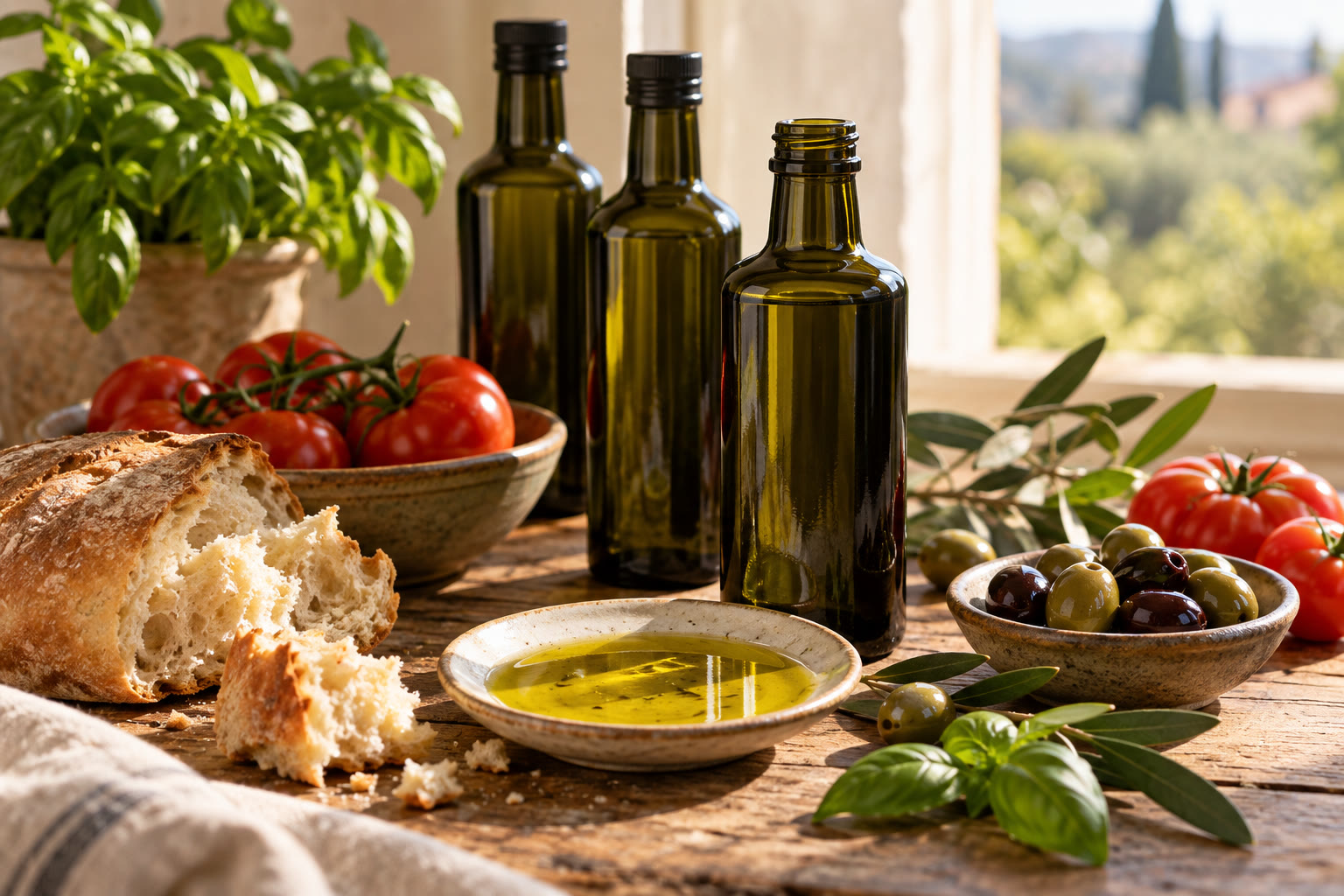
Light, heat, and oxygen accelerate quality loss. Dark glass, metal tins, and bag-in-box packaging offer more protection than a clear bottle left under bright store lights. Packaging cannot turn poor oil into good oil, but it can help good oil stay good.
Read origin claims carefully
Where an oil was bottled is not necessarily where the olives were grown or milled. More specific producer, mill, harvest, and origin information gives you more traceability. It does not automatically make one country or region better than another.
Use your nose and taste buds
Fresh extra virgin olive oil can taste fruity, bitter, and pungent. The intensity varies by olive variety and harvest. Rancid oil may smell or taste waxy, stale, or like old nuts.
Color is not a quality test. A green oil is not automatically fresher or better than a golden one.
Treat seals as supporting evidence
Certification and origin seals can show that an oil was evaluated against a stated standard. Read what the seal actually certifies. A familiar-looking emblem with no clear program behind it is decoration, not verification.
Buy the amount your kitchen will use
A large container is only a bargain if you finish it while the oil still tastes good. Once opened, oxygen enters the package every time you pour. A smaller bottle used steadily often makes more sense than a giant tin opened for a year.
Store it like food, not decoration
Keep olive oil tightly closed in a cool, dark cupboard away from the stove and sunny windows. A beautiful clear cruet beside the burner is convenient. It is also where light and heat can work on the oil all day.
The grocery-aisle checklist
- Extra virgin grade for flavor-forward use
- A recent harvest date when available
- Dark glass, tin, or another light-protective package
- Specific producer and origin information
- A real certification program, if a seal is present
- A size you will use while it still tastes fresh
Then cook with it. The point of buying better olive oil is not to admire the bottle. It is to make tomatoes, beans, bread, greens, and roasted vegetables taste like you want another bite.