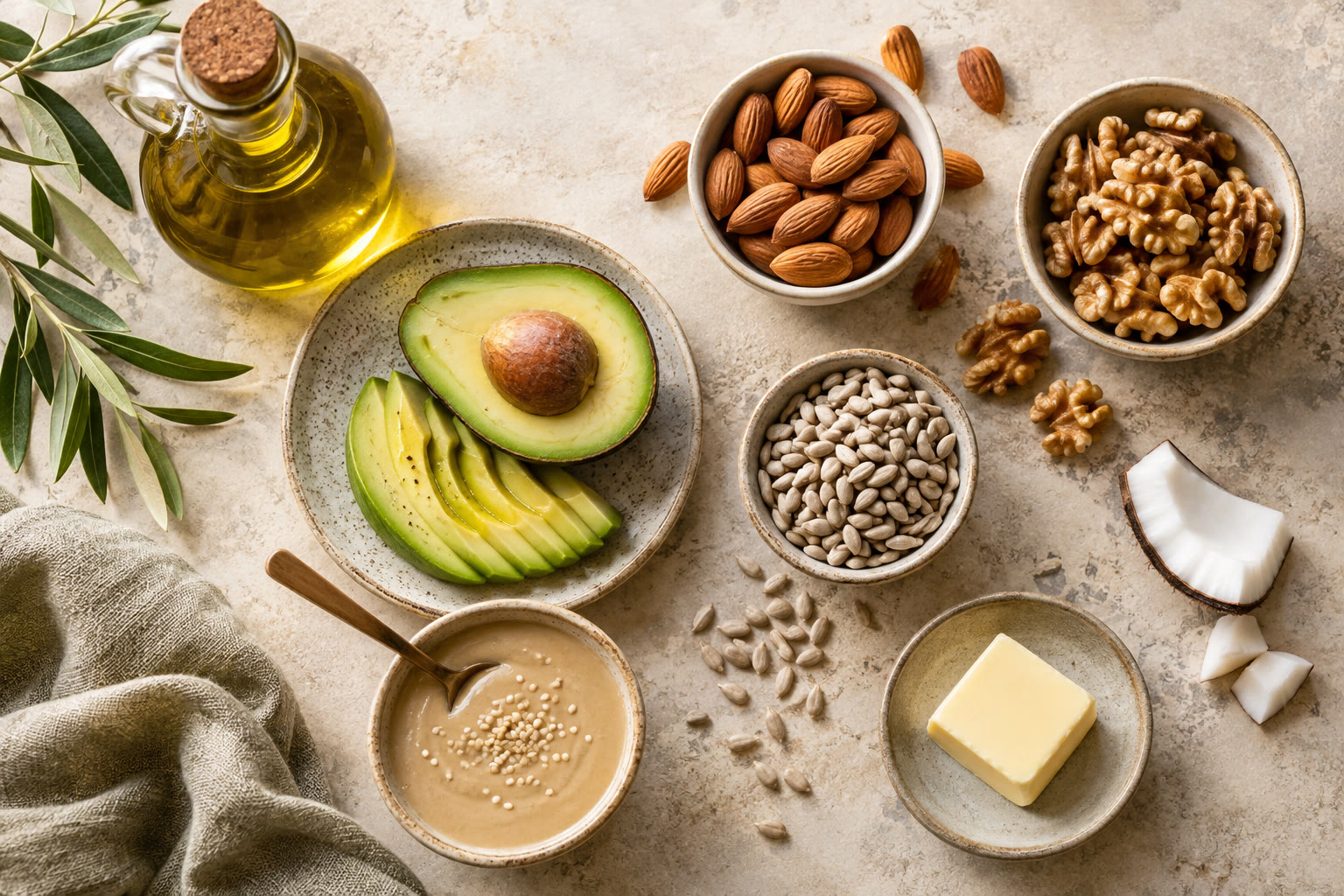
Monounsaturated and polyunsaturated fats are both unsaturated fats. Current heart-health guidance generally favors foods rich in either one when they replace foods high in saturated fat. The important word is replace. Removing butter and filling the gap with refined carbohydrates is not the same move as using olive oil, nuts, seeds, beans, or avocado instead.
The three types at a glance
| Fat type | What makes it different | Common food sources |
|---|---|---|
| Monounsaturated | One carbon-to-carbon double bond | Olive oil, avocados, almonds, peanuts |
| Polyunsaturated | More than one carbon-to-carbon double bond, including omega-3 and omega-6 fats | Walnuts, seeds, soybean oil, fatty fish |
| Saturated | No carbon-to-carbon double bonds | Butter, full-fat dairy, coconut oil, palm oil, fatty meat |
What current guidance actually says
The American Heart Association's 2026 dietary guidance keeps the focus on the whole eating pattern. It recommends choosing sources of unsaturated fat in place of sources of saturated fat, alongside vegetables, fruit, whole grains, and healthier protein choices.
That is more useful than turning one nutrient into a hero and another into a villain. Foods contain mixtures of fatty acids. Olive oil is mostly monounsaturated, walnuts bring polyunsaturated fat, and butter is higher in saturated fat, but none is chemically made from only one kind.
Monounsaturated and polyunsaturated are not interchangeable
Monounsaturated fat is not automatically better than polyunsaturated fat. Polyunsaturated fats include the essential omega-3 and omega-6 fatty acids the body cannot make on its own. Monounsaturated fats, including oleic acid, are common in olive oil, avocados, and many nuts.
Both can fit easily into plant-forward meals: olive oil on roasted vegetables, avocado in a grain bowl, walnuts in a salad, tahini in a dressing, or seeds over toast.
Saturated fat is about the pattern
Saturated fat tends to raise LDL cholesterol, which is why major heart-health guidance recommends limiting it and replacing some of it with unsaturated fats. That does not require treating every bite of butter or cheese as a failure. It means noticing which fats do most of the everyday work in your kitchen.
The practical swap
Use olive oil for most sautéing, roasting, dressings, and finishing. Add nuts, seeds, beans, and avocado where they make the meal better. Keep butter, coconut oil, and higher-fat dairy as ingredients rather than the automatic starting point for everything.
That is the larger point: better food does not come from fearing fat. It comes from choosing sources that bring flavor, texture, and a stronger overall eating pattern.