Oleic Acid
A monounsaturated omega-9 fatty acid common in olive oil, avocados, almonds, and other plant foods.
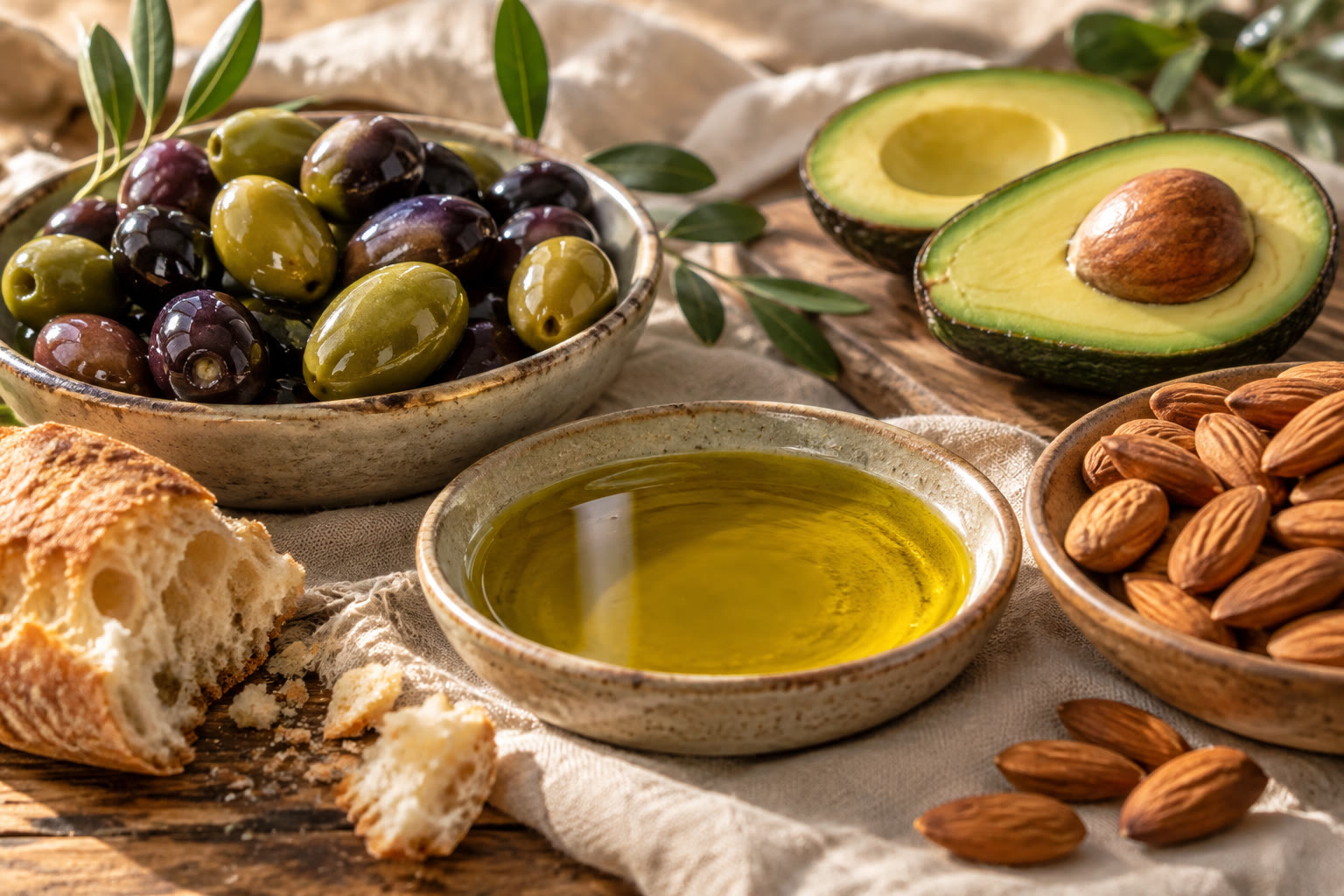
Oleic acid is a monounsaturated fatty acid, which means its carbon chain contains one double bond. It is the dominant fatty acid in olive oil and is also present in avocados, almonds, peanuts, and high-oleic varieties of sunflower and safflower oil. The body can make oleic acid, so it is not classified as an essential fatty acid.
In Practice
When olive oil, avocado, or almonds replace a food higher in saturated fat, oleic acid is one part of the nutritional change. The food also brings its own fiber, vitamins, polyphenols, or other compounds, depending on what you chose.
Worth Knowing
High-oleic does not mean synthetic. It describes an oil made from a plant variety with more oleic acid in its fatty-acid profile. A high-oleic sunflower oil may resemble olive oil in this one respect, but it does not automatically contain the same flavor compounds or olive polyphenols. Oleic acid is one useful detail, not the whole food.